

Magento Returns - How to Reduce Avoidable Returns

Most avoidable returns are decided before the order ships. A product page that oversold or left out a key spec, a mis-picked item, or a delivery that arrived later or different than promised - each sets up a return long before the customer opens the box. You reduce returns in Magento 2 by closing the gap between what the customer expected and what actually turned up, and most of that gap is content and fulfilment, not the product itself.
Why do customers return things they could have kept?
Because the item didn't match the expectation the store set. A jacket that fit the measurements but not the photo, a part that was the right brand but the wrong revision, a "next day" order that landed on day four - none of these are product defects, they're expectation failures. The customer isn't wrong; the store promised something the parcel didn't deliver.
That's the useful distinction: some returns are genuine (changed mind, genuine fault) and some are avoidable (the store created a mismatch it could have prevented). You can't design away the first kind, but the avoidable ones are a content and fulfilment problem, and those you control. Getting the avoidable rate down is where the money is, because every avoidable return costs you the outbound shipping, the return shipping, the restocking labour, and often the resale margin.
Which returns are actually preventable?
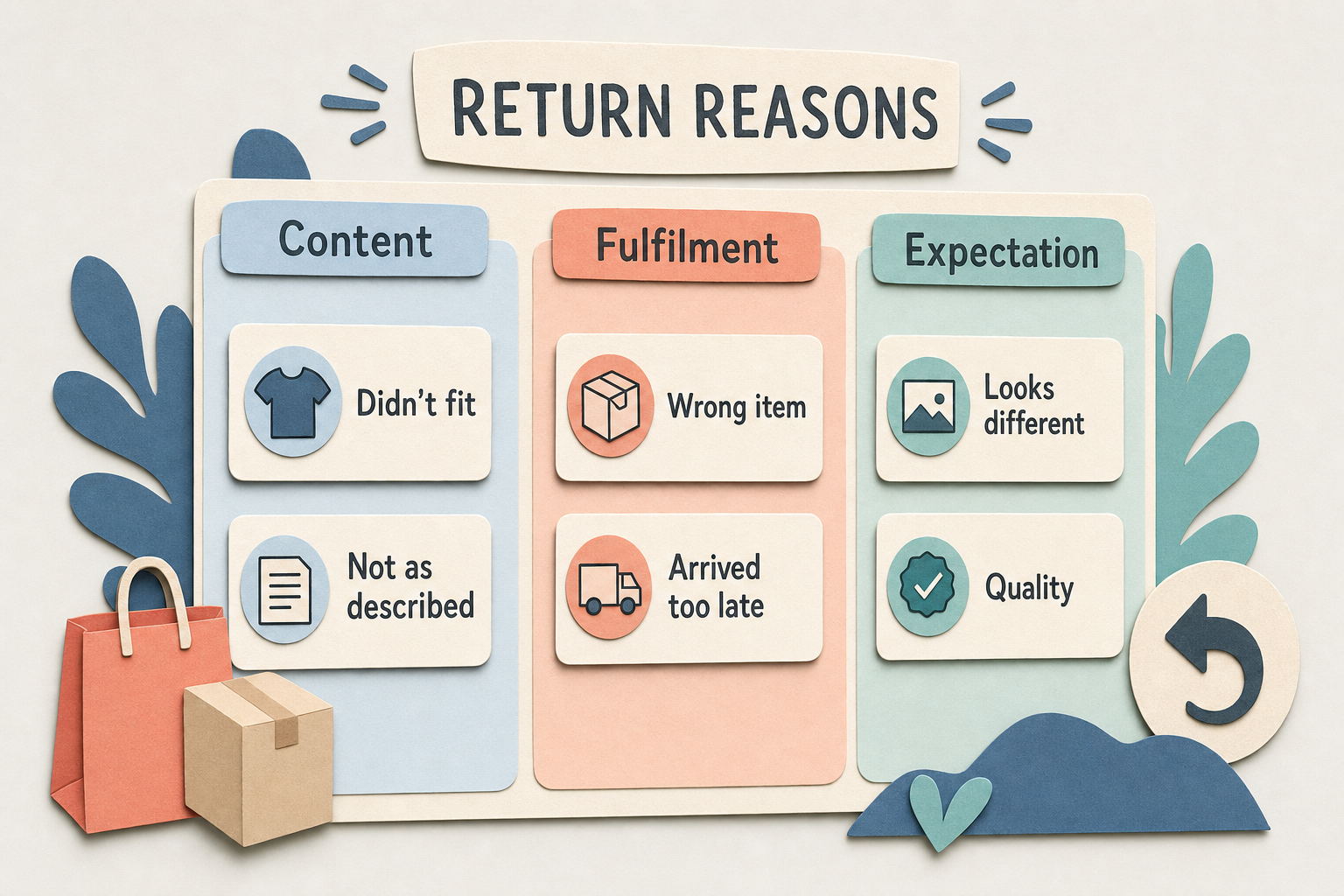
Preventable returns cluster into three root causes - unclear content, fulfilment error, and mismatched delivery expectation - and each has a specific lever. Naming the cause matters, because "improve the customer experience" goes nowhere while "add dimensions to 400 product pages" gets done:
| Return reason | Root cause | Prevention lever |
|---|---|---|
| "Didn't fit" | Missing or vague sizing data | Complete size and dimension data, a sizing guide, consistent measurements |
| "Not as described" | Thin or oversold product copy | Accurate descriptions, specs that match the product, real detail over hype |
| "Wrong item / compatibility" | Missing compatibility info, or a mis-pick | Compatibility notes on the page; scan-verified picking in the warehouse |
| "Looks different" | Poor or misleading images | Accurate, multi-angle images that match what ships |
| "Arrived too late" | Delivery slower than the page implied | Realistic delivery dates set before purchase and confirmed after |
| "Quality not as expected" | Materials, weight or finish unstated | Material, weight and finish in the specs, plus reviews for context |
How this applies to Magento 2
Magento 2 handles the return itself well enough - its RMA system processes authorisations and refunds - but it does nothing to prevent the return in the first place. Nothing in the admin flags a product page missing its dimensions, checks that the item picked matches the order, or reconciles the delivery date you implied at checkout with the one the carrier actually hit.
So return prevention in Magento is three practical jobs the platform leaves to you. Make product content complete and accurate so the page sets a true expectation. Verify the right item leaves the building. And set a delivery date the customer can trust, then keep them informed if it slips. Each attacks a different slice of the preventable-returns pie.
Where Moogento helps
On the content side, ProductContent drafts the descriptions, specifications and product FAQ that thin pages are missing, working from your catalogue data within guardrails you set - brand tone, forbidden claims (so nothing gets oversold into a "not as described" return), allowed HTML and SEO rules - with a review step before publishing. The point isn't more words, it's the specific detail that stops a return: the exact dimensions, the material, the compatibility note. A page that answers "will this fit and work for me" truthfully loses fewer parcels to the returns bin.
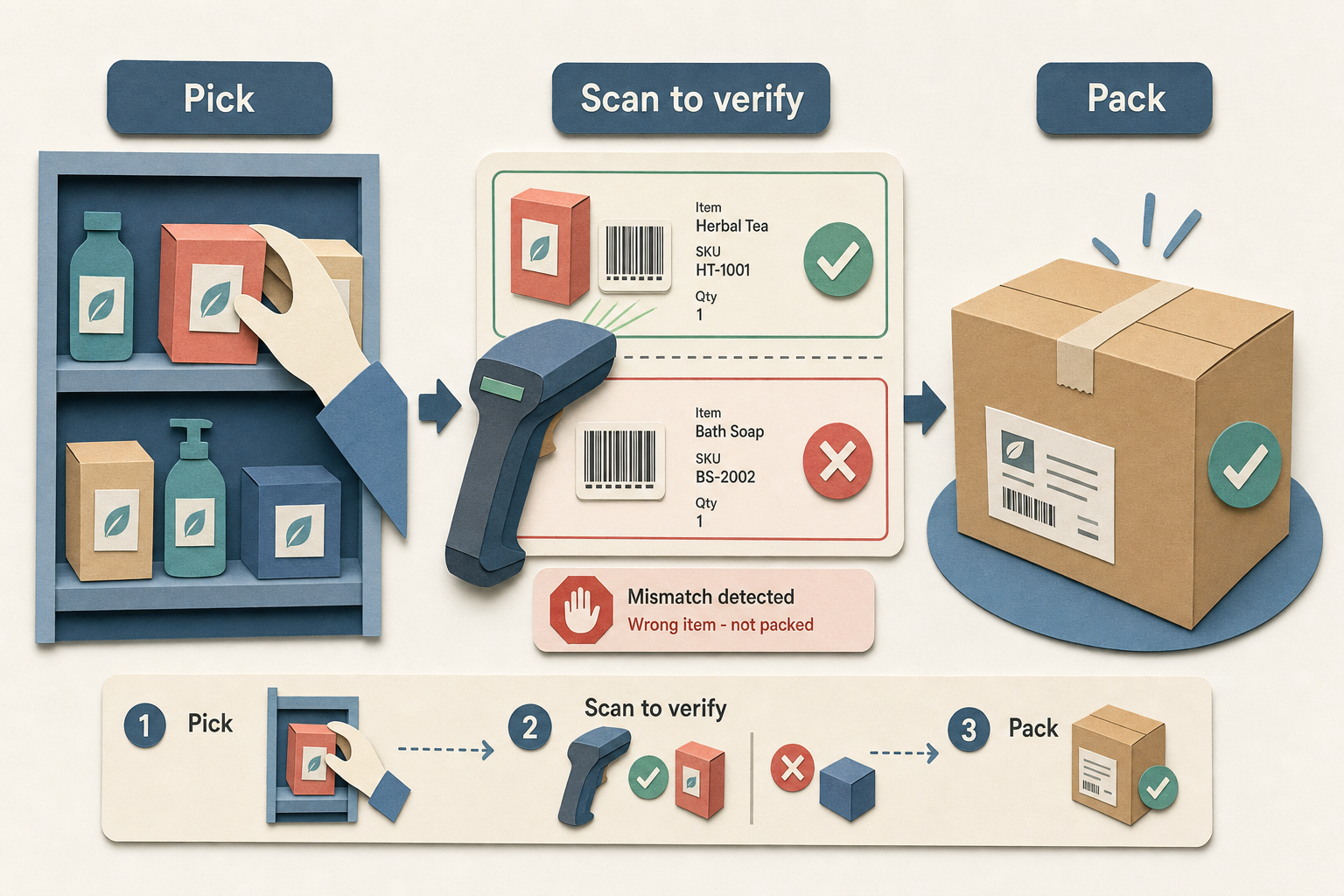
On the fulfilment side, wrong-item returns are the most infuriating kind because the customer did everything right. PickPack produces the packing sheets and pick lists - including barcode-bearing documents and batch-friendly layouts - that keep picking accurate, and its sibling Pick-n-Scan adds a scan-to-verify step where staff scan items against the assigned order before it's packed, so a mis-pick is caught at the bench rather than at the customer's door. For the delivery-expectation slice, TrackEasy sets a delivered-by date estimate on the tracking timeline and emails the customer when that date changes, which defuses the "arrived too late" return before it turns into a refund request.
Return prevention checklist
- Pull your last quarter's return reasons and split them into content, fulfilment and expectation causes. The biggest slice is your starting point.
- Take your top-returned product and read its page as a first-time buyer. What did you have to guess?
- Check dimension, material and compatibility coverage across the catalogue, not just your hero products.
- Confirm your product images match what actually ships, including colour and scale.
- Add a scan-or-double-check step to picking for your most-returned or most-confusable SKUs.
- Compare the delivery date you imply at checkout with the date customers actually receive. A gap here feeds "arrived too late" returns.
- Read your reviews for the same phrase repeated ("runs small", "smaller than it looks"). That's a content fix hiding in plain sight.
- For sizing-heavy categories, add or standardise a sizing guide so measurements are consistent across products.
FAQ
What causes the most avoidable ecommerce returns?
Unclear or oversold product content is usually the largest avoidable cause - missing sizing, vague specs, and images that don't match what ships. Fulfilment errors (wrong item picked) and mismatched delivery expectations make up most of the rest. All three are within the store's control, unlike genuine faults or a changed mind.
Can better product descriptions really reduce returns?
Yes, when they add specific decision-making detail rather than more marketing. A return often comes from a question the page didn't answer - will it fit, is it compatible, what's it made of. Putting that detail on the page removes the mismatch that drives the return.
How do I stop shipping the wrong item?
Add a verification step between picking and packing. A scan-to-verify workflow, where staff scan each item against the order before it's boxed, catches a mis-pick at the bench. In Magento, that's Pick-n-Scan alongside PickPack's pick lists and packing sheets, rather than anything native.
Does Magento 2 help prevent returns?
Magento 2 processes returns through its RMA system but has no native tools to prevent them. Prevention comes from complete product content, accurate fulfilment, and realistic delivery expectations - all of which sit on top of Magento rather than inside it.
Start with your own return reasons. Once they're split into content, fulfilment and delivery causes, the fix for the biggest slice is a defined project - fill the content gaps, add a scan check, or tighten the delivery promise - not an open-ended "reduce returns" wish. For the tickets these returns generate along the way, the same logic applies to deflecting support load with better storefront information.


